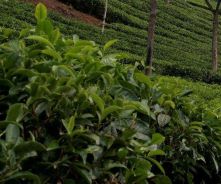
Skoncentrowany ekstrakt z zielonej herbaty z ekologicznych upraw (certyfikat ECOCERT), standaryzowany na zawartość kofeiny, katechin i tanin.
Zielona herbata (Camellia Sinensis) to przede wszystkim popularny napój, wywodzący się z krajów azjatyckich. W Japonii zielona herbata to symbol długowieczności i młodości.
Rodzaj herbaty zależy od pory zbioru liści oraz metod ich przetwarzania. Zielona herbata produkowana jest z niefermentowanych, młodych listków herbaty, które suszy się tuż po zbiorze.
Składnik ten wykorzystywany jest zarówno zewnętrznie w kosmetykach i wewnętrznie w postaci napojów i suplementów. Jest ona doceniana głównie za właściwości antykancerogenne, antyoksydacyjne i przeciwzapalne. Cenne własności liści zielonej herbaty, wynikają głównie z wysokiej zawartości związków charakterystycznych dla świata roślin zwanych polifenolami.
Zielona herbata zawiera wiele rodzajów polifenoli, z czego najważniejsze to katechiny (flawanole). W liściach herbaty zidentyfikowano 6 rodzajów katechin, z których główna to galusan epigallokatechiny (EGCG).
Pozostałe składniki liści zielonej herbaty to: flawonole (kwercetyna, kamferol, rutyna), taniny katechinowe, proantocyjanidyny, ksantyny 1-4% (kofeina, teobromina, teofilina), teanina (aminokwas), kwasy fenylowe (kofeinowy, galusowy, chlorogenowy), minerały (mangan, fluorki, glin), witaminy z grupy B i C, olejki eteryczne.
Polifenole stanowią 30% suchej masy liści zielonej herbaty. Filiżanka zielonej herbaty zawiera średnio 100-200mg polifenoli, w tym ok. 40-80mg katechiny EGCG. Dla porównania, liście czarnej herbaty zawierają tylko 4% polifenoli.
Właściwości i działanie na skórę i włosy ekstraktu z zielonej herbaty:
- Polifenole z zielonej herbaty są silnymi antyoksydantami, zwalczającymi różne formy wolnych rodników (tlen singletowy, rodniki ponadtlenkowe, nadtlenek wodoru, rodnik hydroksylowy).
- Posiada własności antykancerogenne, chroni komórki skóry, w tym DNA przed zmianami nowotworowymi powodowanymi promieniowaniem UV.
- Zarówno polifenole (katechiny), taniny i kofeina z zielonej herbaty, wspomagają ochronę skóry przeciw promieniowaniu UVB/UVA; chronią komórki skóry przed zniszczeniami powodowanymi przez promieniowanie UV.
- Posiada silne działanie antyzapalne i łagodzące; zmniejsza podrażnienie i zaczerwienienie.
- Wspomaga gojenie oparzeń słonecznych, zastosowany przed ekspozycją na słońce, hamuje poparzenie posłoneczne powodowane przez UVB.
- Stymuluje regenerację i podziały komórkowe, tym samym wspomaga gojenie drobnych uszkodzeń skóry.
- Działa antybakteryjnie..
- Wspomaga terapię trądziku, łącznie z trądzikiem różowatym; hamuje aktywność enzymu 5-alfa reduktazy, który wzmaga pracę gruczołów łojowych, co powoduje silniejsze przetłuszczanie skóry i tworzenie wyprysków.
- Polecany przy problemach z łuszczycą i łupieżem.
- Działa przeciwzmarszczkowo, hamuje aktywność kolagenaz i metaloproteinaz (MMP) - enzymów, które powodują rozkład kolagenu i elastyny - białek odpowiedzialnych za jędrność i młody wygląd skóry. Dodatkowo hamuje utlenianie białek oraz proces glikacji, który także jest jedną z przyczyn starzenia skóry.
- Hamuje utlenianie tłuszczy; zarówno polifenole jak i taniny działają porównywalnie do syntetycznego antyoksydanta BHT (butyl-hydroxytoluene).
- Stymuluje cebulki włosów do wzrostu i wydłuża fazę anagenową, czyli fazę wzrostu włosów. Za efekt ten odpowiedzialne są katechiny, zwłaszcza katechina EGCG. Polecany jest przy wypadaniu włosów oraz łysieniu androgenowym (łysieniu na tle hormonalnym) zarówno u kobiet i mężczyzn. |
1. Dane techniczne producenta
2. 'Skin photoprotection by green tea: antioxidant and immunomodulatory effects' Katiyar SK.; Curr Drug Targets Immune Endocr Metabol Disord. 2003
3. 'Comparative effects of polyphenols from green tea (EGCG) and soybean (genistein) on VEGF and IL-8 release from normal human keratinocytes stimulated with the proinflammatory cytokine TNFalpha' Trompezinski S, Denis A, Schmitt D, Viac J. Arch Dermatol Res. 2003 Jun 13
4. 'Treatment of green tea polyphenols in hydrophilic cream prevents UVB-induced oxidation of lipids and proteins, depletion of antioxidant enzymes and phosphorylation of MAPK proteins in SKH-1 hairless mouse skin' Vayalil PK, Elmets CA, Katiyar SK. Carcinogenesis. 2003 May;24(5):927-36
5. 'Green tea polyphenols induce differentiation and proliferation in epidermal keratinocytes' Hsu S, Bollag WB, Lewis J, Huang Q, Singh B, Sharawy M, Yamamoto T, Schuster G; J Pharmacol Exp Ther. 2003 Jul
6. 'The green tea polyphenol, epigallocatechin-3-gallate, protects against the oxidative cellular and genotoxic damage of UVA radiation' Tobi SE, Gilbert M, Paul N, McMillan TJ. Int J Cancer. 2002 Dec 10
7. 'Stimulatory effect of topical application of caffeine on UVB-induced apoptosis in mouse skin' Lu YP, Lou YR, Li XH, Xie JG, Lin Y, Shih WJ, Conney AH Oncol Res. 2002;13(2):61-70
8. 'Green tea polyphenolic antioxidants and skin photoprotection (Review)' Katiyar SK, Elmets CA. Int J Oncol. 2001 Jun
9. 'Green tea polyphenol (-)-epigallocatechin-3-gallate treatment of human skin inhibits ultraviolet radiation-induced oxidative stress' Katiyar SK, Afaq F, Perez A, Mukhtar H. Carcinogenesis. 2001 Feb
10. 'Stabilizing effect of ascorbic acid on flavan-3-ols and dimeric procyanidins from cocoa' Zhu QY, Hammerstone JF, Lazarus SA, Schmitz HH, Keen CL.: J Agric Food Chem. 2003 Jan
11. 'Transdermal delivery of (-)-epigallocatechin-3-gallate, a green tea polyphenol,in mice' Lambert JD, Kim DH, Zheng R, Yang CS. J Pharm Pharmacol. 2006 May
12. Asian Functional Foods By John Shi, Chi-Tang Ho, Fereidoon Shahidi; CRC Press 2005
13. What green tea can and cannot do for your skin - wgląd Listopad 2007
14. 'Protective activity of green tea against free radical- and glucose-mediated protein damage' Nakagawa T, Yokozawa T, Terasawa K, Shu S, Juneja LR. J Agric Food Chem 2002 Apr
15. 'Green tea' L.Baumann; Skin&Allergy News, Feb. 2001
16. 'Inhibition of tumour promotion in mouse skin by extracts of rooibos (Aspalathus linearis) and honeybush (Cyclopia intermedia), unique South African herbal teas' Marnewick J, Joubert E, Joseph S, Swanevelder S, Swart P, Gelderblom W. Cancer Lett. 2005 Jun 28
17. 'The effects of epigallocatechin-3-gallate on extracellular matrix metabolism' Lee JH, Chung JH, Cho KH.J Dermatol Sci. 2005 Aug 12
18. 'Administration of green tea or caffeine enhances the disappearance of UVB-induced patches of mutant p53 positive epidermal cells in SKH-1 mice' Lu YP, Lou YR, Liao J, Xie JG, Peng QY, Yang CS, Conney AH. Carcinogenesis. 2005 Apr 7
19. 'Prevention of photocarcinogenesis and UV-induced immunosuppression in mice by topical tannic acid' Gensler HL, Gerrish KE, Williams T, Rao G, Kittelson J. Nutr Cancer. 1994;22(2):121-30
20. 'Polyphenol tannic acid inhibits hydroxyl radical formation from Fenton reaction by complexing ferrous ions' Lopes GK, Schulman HM, Hermes-Lima M. Biochim Biophys Acta. 1999 Oct
21. 'Green tea extract suppresses the age-related increase in collagen crosslinking and fluorescent products in C57BL/6 mice' Rutter K, Sell DR, Fraser N, Obrenovich M, Zito M, Starke-Reed P, Monnier VM. Int J Vitam Nutr Res. 2003 Nov
22. 'Green Tea and Skin' Katiyar, Santosh K. PhD; Ahmad, Nihal PhD; Mukhtar, Hasan PhD, Archives of Dermatology August 2000
23. Orally effective, essentially water-free topical agent containing one or several oxidation-sensitive substances US Patent 20070053851
24. 'Treatment of acne vulgaris with 2% topical tea lotion' Sharquie KE, Al-Turfi IA, Al-Shimary WM. Saudi Med J. 2006 Jan
25. 'Cutaneous photodamage, oxidative stress, and topical antioxidant protection' SR.Pinnell; J Am Acad Dermatol. 2003 Jan
26. 'Oral care formulating with epigallocatechin gallate' C. Sacker; C&T September 2004
27. 'Inhibitory effect of tea catechins on collagenase activity' M. Makimura, M.Aizawa, M.Kim, T.Yamamoto; J.Periodontol 64, 1993
28. 'Cutaneous Androgen Metabolism: Basic Research and Clinical Perspectives' WenChieh Chen, Diane Thiboutot, Christos C Zouboulis; Journal of Investigative Dermatology (2002) 119
29. 'Management of papulopustular rosacea with 2% green tea extract (-)EGCg hydrophilic cream. A placebo-controlled, double-blind study' T. Syed, W.H.W. Wong, V. Govil, R. Aly, S.A. Ahmad, Poster at EADV May 2007
30. Evaluation of antioxidant activity of Australian tea tree (Melaleuca alternifolia) oil and its components. Kim HJ, Chen F, Wu C, Wang X, Chung HY, Jin Z. J Agric Food Chem. 2004 May
31. 'Transdermal Delivery of Tea Catechins and Theophylline Enhanced by Terpenes: a Mechanistic Study' Jia-You FANG, Tung-Hu TSAI, Yu-Ying LIN, Wen-Wen WONG, Meng-Nan WANG, Jeng-Fen HUANG; Biol. Pharm. Bull. Feb 2007
32. '2% GREEN EXTRACT (-EGCg, Polyphenone) IN A HYDROPHILIC GEL FOR THE MANAGEMENT OF FACIAL WRINKLES AND PREMATURE AGING.' Tanweer A. Syed, Wendy Hiu-Wai Wong, Poster 2004
33. 'Inhibitory Effect of Green Tea Polyphenols on Membrane-Type 1 Matrix Metalloproteinase, MT1-MMP' Naoto OKU, Motomi MATSUKAWA, Satoru YAMAKAWA, Tomohiro ASAI, Shoji YAHARA, Fumio HASHIMOTO, Toshifumi AKIZAWA; Biol. Pharm. Bull. September 2003
34. 'Stability of Green Tea Catechins' Qin Yan Zhu, Anqi Zhang, David Tsang, Yu Huang, and Zhen-Yu Chen; J. Agric. Food Chem. 1997, 45,
35. 'Pharmacokinetics of the green tea derivative, EGCG, by the topical route of administration in mouse and human skin' Katerina Dvorakova á Robert T. Dorr á Susanne Valcic; Cancer Chemother Pharmacol (1999) 43
36. 'Preformulation Study of Epigallocatechin Gallate, a Promising Antioxidant for Topical Skin Cancer Prevention' STEFAN PRONIUK, BIANCA M. LIEDERER, JAMES BLANCHARD; JOURNAL OF PHARMACEUTICAL SCIENCES, VOL. 91, NO. 01, JANUARY 2002
37. 'Antioxidant Chemistry of Green Tea Catechins. Identification of Products of the Reaction of (-)-Epigallocatechin Gallate with Peroxyl Radicals' Susanne Valcic, Annette Muders, Neil E. Jacobsen, Daniel C. Liebler, Barbara N. Timmermann; Chem. Res. Toxicol. 1999, 12
38. 'Stabilizing Effect of Ascorbic Acid on Green Tea Catechins' Zhen-Yu Chen, Qin Yan Zhu, Yeun Fan Wong, Zesheng Zhang, Hau Yin Chung; J. Agric. Food Chem. 1998, 46
39. 'Liquid chromatograpic-mass spectrometric analysis of phenolics and free radical scavenging activity of rosemary extract from different raw material' Almela L, Sánchez-Muñoz B, Fernández-López JA, Roca MJ, Rabe V J Chromatogr A. 2006 Jul
40. 'The influence of antioxidant and chelating agents on the stability of catechins, with particular reference to (-)-epigalocatechin-gallate (EGCG) and (-)-epicatechin (EC) in topical emulsion based formulations' RODE T. FRAUEN M. MÜLLER B. W. SCHÖNROCK U. MUNDT C. HINTZE U. WENCK H; SÖFW-journal 2002, vol. 128
41. Beninger, C.W., Hosfield, G.L. 2003. Antioxidant Activity of Extracts, Condensed Tannin Fractions, and Pure Flavonoids from Phaseolus vulgaris L. Seed Coat Color Genotypes. Journal of Agricultural and Food Chemistry. 51
42.'Green tea polyphenol induces caspase 14 in epidermal keratinocytes via MAPK pathways and reduces psoriasiform lesions in the flaky skin mouse model' Stephen Hsu, Douglas Dickinson, James Borke, Douglas S. Walsh, Joseph Wood, Haiyan Qin, Julia Winger, Henna Pearl, George Schuster and Wendy B. Bollag Experimental Dermatology
Volume 16
43. Elmets CA, Singh D, Tubesing K, Matsui M, Katiyar S, Mukhtar H. Cutaneous photoprotection from ultraviolet injury by green tea phenols. J Am Acad Dermatol 44 (2001)
44. '(-)Epigallocatechin gallate hampers collagen destruction and collagenase activation in ultraviolet-B-irradiated human dermal fibroblasts: Involvement of mitogen-activated protein kinase' Bae JY, Choi JS, Choi YJ, Shin SY, Kang SW, Han SJ, Kang YH; Food Chem Toxicol. 2007 Dec 8
45. Green tea extract reduces induction of p53 and apoptosis in UVB-irradiated human skin independent of transcriptional controls; Exp Dermatol. 2008 Jul 9
46. O.S. Kwon et al. Human hair growth enhancement in vitro by green tea epigallocatechin-3-gallate (EGCG). Phytomedicine (2006)
|